
 About
About
How Hunepulley Double Wheel Sliding Door Roller Maintains Panel Alignment
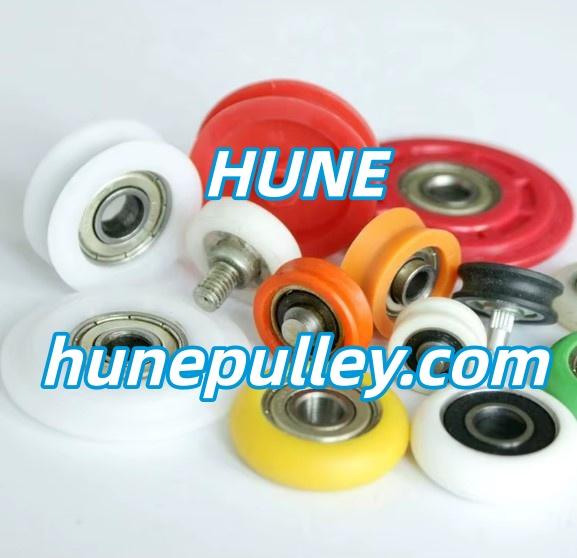
Heavy sliding doors, such as those used in commercial spaces or wide interior partitions, demand rolling components that handle substantial weight while maintaining smooth movement. The Hune Double Wheel Sliding Door Roller is designed precisely for this purpose. Its dual-wheel construction distributes load evenly across the track, reducing friction and preventing uneven motion that could strain both door and track.
Using a double wheel system also improves stability. Unlike a single-wheel roller, the twin contact points keep the door aligned along its path, minimizing wobble during operation. This feature is particularly useful in wide panels that otherwise risk tilting or binding.
How double wheels support load distribution
When a heavy door slides, the weight is not always perfectly centered. Pressure points can form along the track, increasing wear and requiring more effort to move the panel. A roller with two wheels allows weight to spread across multiple contact surfaces. This approach lessens local stress on the track and maintains balanced motion along the full length of the sliding path.
Key advantages include:
reduced localized friction
smoother forward and backward motion
longer hardware lifespan
consistent panel alignment
Alignment and motion consistency
For wide doors, alignment is crucial. Small misalignments can cause scraping against the frame or uneven movement. Double wheel rollers naturally maintain parallel contact with the track, preventing lateral shifts. When each wheel rotates independently along its respective path, the door follows a straighter trajectory and requires less adjustment over time.
Designers often select rollers with durable materials and precise wheel geometry to achieve reliable operation, especially in high-traffic areas or heavy panel systems.
Material choice affects performance
The outer surfaces of sliding rollers need to balance strength and smoothness. Metal, polymer, or hybrid combinations often appear in double wheel designs. Stiff materials resist deformation under load, while smooth contact surfaces reduce friction and noise.
Considerations for material selection include:
wear resistance for repeated sliding cycles
smooth contact to protect track surfaces
resistance to environmental conditions such as humidity
maintaining shape under heavy pressure
Proper material choice ensures the door continues moving fluidly without unwanted vibration or squeaking.
Installation and track interaction
Correct installation is essential for double wheel rollers to function properly. Both wheels must sit firmly on the track, and the panel should remain balanced from end to end. During setup, installers often:
check that track surfaces are clean and unobstructed
verify panel weight is evenly distributed
confirm both wheels maintain contact along the full travel length
Even minor deviations in installation can affect performance, but a well-fitted double wheel unit compensates for small inconsistencies, keeping movement consistent.
Applications in modern hardware
Double wheel sliding door rollers are versatile. They appear in various settings, from office partitions to patio doors or interior glass dividers. The need for stable, smooth motion across wide openings makes the dual-wheel approach ideal for environments where both performance and aesthetics matter.
Advantages include:
quieter sliding motion in high-use areas
reduced long-term maintenance
stability for oversized or heavy panels
compatibility with custom track designs
Custom molded components
Many sliding systems also rely on molded hardware to support roller operation. Small molded components without shafts can be customized to fit specific installation requirements, supporting the overall motion of the door. These pieces often serve as guides, supports, or connectors for the roller assembly.
Manufacturers capable of producing custom injection molded parts offer flexibility for hardware designers, allowing them to adapt double wheel rollers for unique or challenging configurations.
Supporting heavy doors without complex mechanics
Double wheel designs achieve heavy door support without overly complicated structures. The simplicity of twin wheels combined with proper alignment, material choice, and track design allows doors to glide efficiently. Even systems without integrated bearings can perform well when paired with well-designed molded components.
This balance of simplicity and adaptability is appealing to builders, interior designers, and hardware engineers who require reliable performance in heavy sliding applications.
For hardware developers and project planners seeking adaptable solutions, Hunepulley provides custom molded components, including double wheel structures and other small injection molded pulleys without shafts. These components can be tailored for diverse sliding systems. Full product details are available at Hunepulley

 English
 Arabic
 French
 Portuguese
 Deutsch
 Turkish
 Dutch
Dutch
 Italiano
 Russian
 Romaian
 Portuguese (Brazil)
 Greek
Greek